

 Back
Back
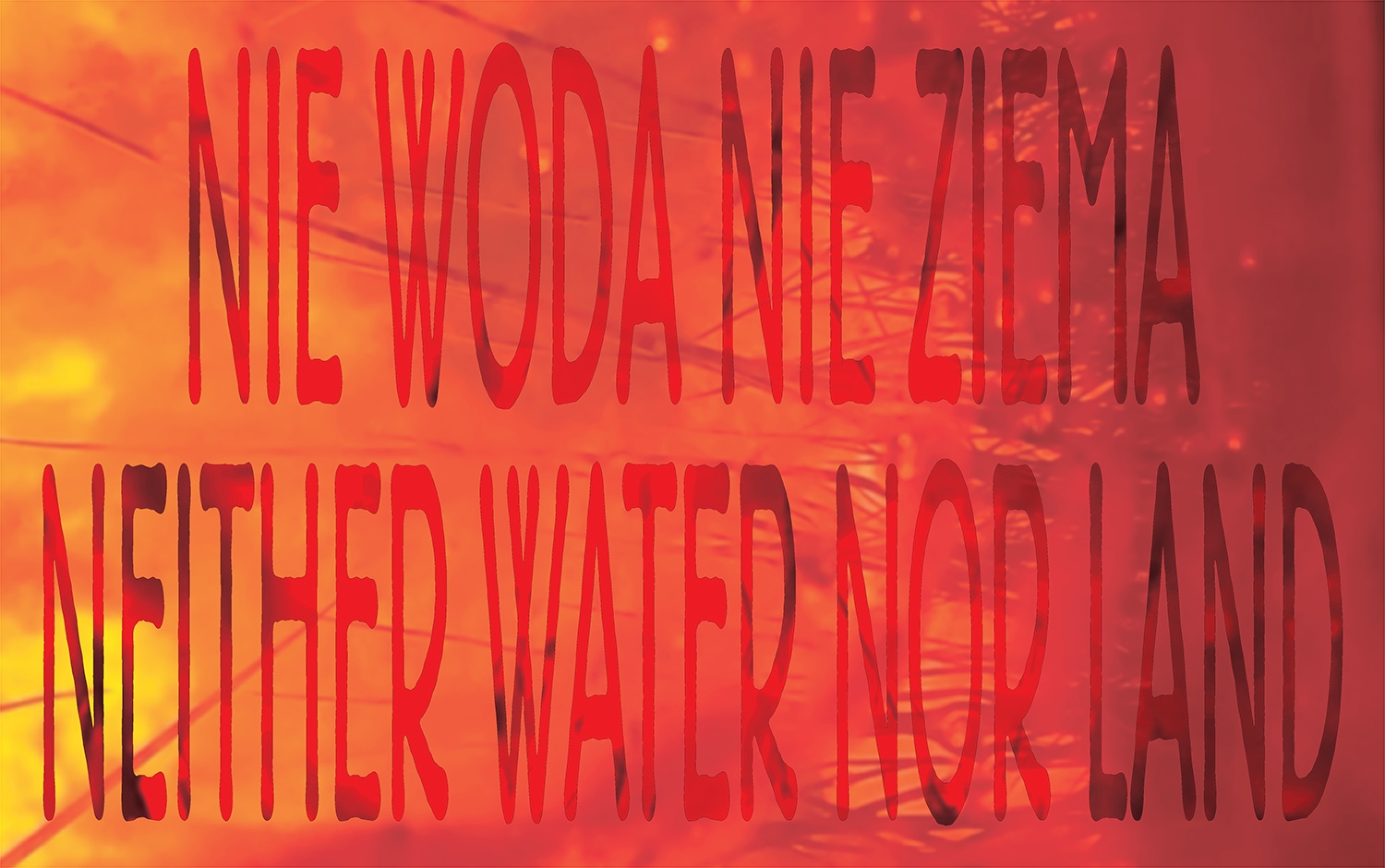
Neither Water Nor Land
Artists
Teresa Margolles, Alia Farid, Zainab Aldehaimy, Roisin Agnew, Hoda Afshar, Katarzyna Hertz, Breda Lynch, Philipp Modersohn, Vica Pacheco, Stach Szumski, Iza Tarasewicz, Zhang Xuzhan, Zorka Wollny, Glenda Zapata
Press release
Neither Water Nor Land begins in a place where time does not advance in a straight line. It settles. It thickens. It lingers underfoot. In peatlands, low oxygen and acidic water slow decay to an almost improbable degree – bodies, fabrics, seeds and wooden tools can endure for millennia. What was meant to vanish, instead persists. The bog becomes an unintended archive, holding stories that societies would rather discard and suspending them in a damp, uneasy present. What are known as 'bog bodies', lifted out of the peat, often bear traces of ritual violence. Their composure can deceive: beneath the smooth surface lie wounds, ropes and fractures. At a certain point, the swamp ceases to be landscape and becomes a question about order and the cost of maintaining it.
Who was sacrificed? Why that person? And yet wetlands have also served another purpose. For centuries, they have been refuges – hiding places for deserters, partisans, smugglers and fugitives, for those who had to disappear in order to survive. The hostile terrain could protect as much as it could destroy. This ambivalence is not confined to the past. It resurfaces along today's "green borders", including the Polish–Belarusian frontier, where forest and marsh combine to form lethal corridors along which people are pushed back and forth, stuck in a zone suspended between law and abandonment. The saturated ground slows the body, erases traces and complicates rescue. It acts as a shield and as a weapon. For centuries, wetlands have been drained in the name of hygiene, progress and security – dismissed as wasteland to be subdued.
Today, they are returning within a new extractive logic: as sites earmarked for military investment, and even as places where water cools datacentres – the hidden underlayer of the digital economy. A landscape once deemed useless proves useful again. Moving between geology, myth and contemporary politics, the exhibition asks what happens when a landscape refuses to dry out or be neatly arranged. In a world fixated on firm borders, the bog suggests another tempo – slower, saturated and persistent. At times, it leaves behind only a faint mineral blue: vivianite, coating bone and waterlogged wood, touching whatever the bog has held. Its hypnotic greenish-blue hue becomes a subtle signature of the exhibition – a trace of what was pushed aside. Here, the bog is treated as an anaerobic laboratory: a space that suspends decay, preserves violence and longing alike, quietly loosening the boundaries of what we call "rational".
Curators: Anna Czaban, Krzysztof Gutfrański
- Through
- 27 September 2026
- Venue
- Ujazdowski Castle Centre for Contemporary Art
- Address
- Jazdów 2
00-467 Warsaw
- Hours
- Tue–Sun 11:00–19:00, Thu 11:00–20:00